
College of sciences
Biology
The University of Findlay Biology program prepares you for a successful career.
Overview
About the Program
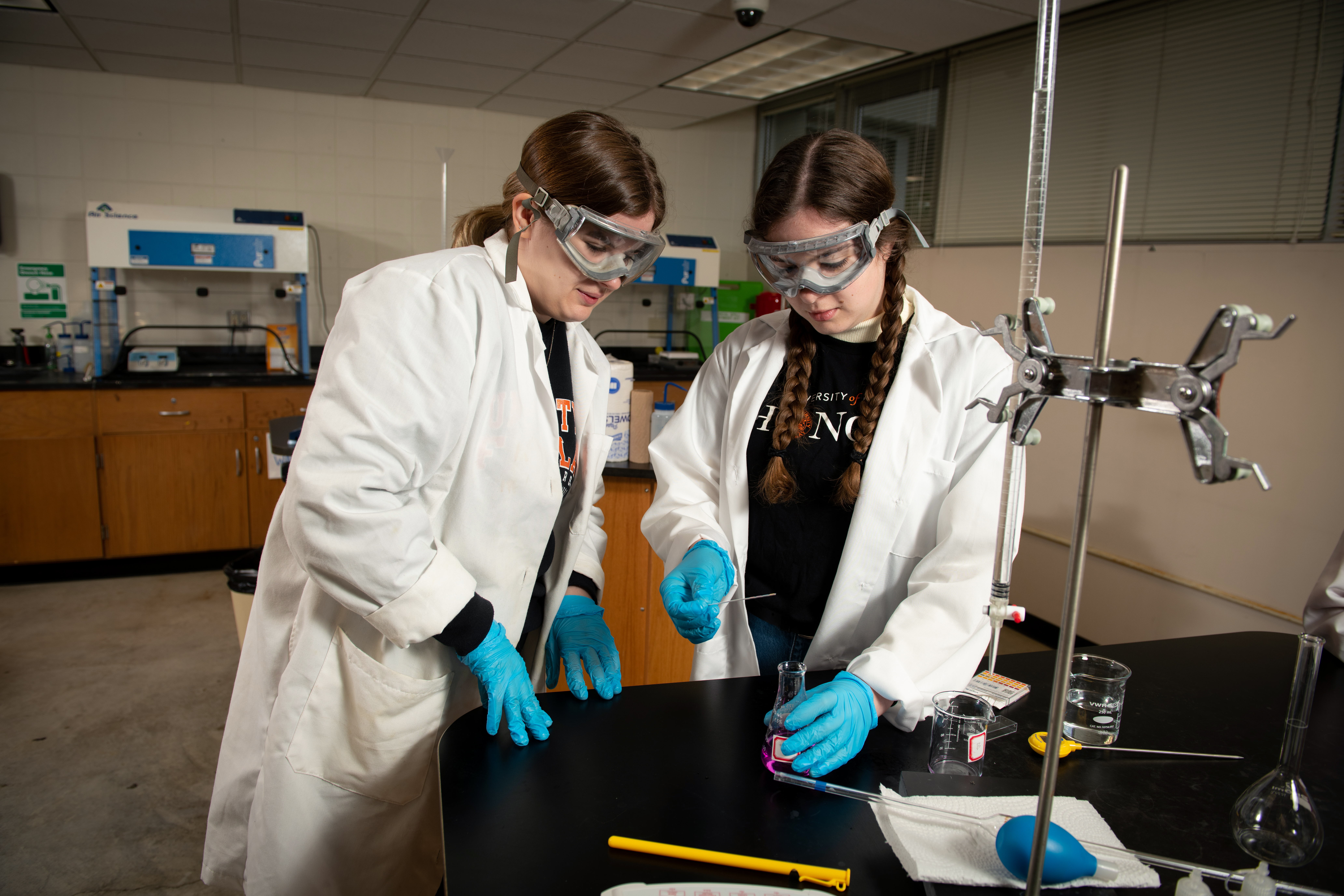
The University of Findlay Biology program prepares students for a wide range of scientific and professional pathways, from hands-on biological research to advanced study in the health sciences. Whether your goal is to explore biodiversity, study antibiotic resistance, or pursue a career in medicine, veterinary medicine, or physician assistant studies, this program provides the strong scientific foundation and practical skills needed for success.
We also offer a Biology degree with a Pre-Med emphasis for students wishing to pursue medical school upon graduation.
Program
Highlight
At the University of Findlay, a biology degrees sets you up for a successful career.
Innovative and Eco-Friendly Teaching Facilities
92% Professional & Graduate School Acceptance Rate
Internship/Field Experience
Access to the Rieck Center for Habitat Studies
College of sciences
At a Glance
College
College of Sciences
Degree
Bachelor of Science in Biology
Format
On-Campus
Required credits
120+ Credits
Curriculum
Course Requirements
Students earning a Bachelor of Science in Biology must complete the following curriculum.
The curriculum consists of required courses with an option in Biology or Pre-Med Emphasis. View the full curriculum in the University of Findlay Undergraduate Catalog.

on-campus
Undergraduate Research
From your very first year, you’re encouraged to join faculty research projects and start building the hands-on skills that will set you apart in your career.
Research Opportunities Include:
- Antibiotic resistance in freshwater systems
- Evolution, genetic diversity, and adaptation of viruses and other infectious pathogens
- Macroinvertebrate communities as an indicator of water quality
- Nutritional impacts on the human immune system
- Investigating the relationships between biomechanics and functional morphology
- Changes in arboreal communities over time in canopy, forest, and urban environments
- Using histology to uncover the ecological stories of amphibians and reptiles
- Molecular phylogeny of marine invertebrates
- Anti-cancer properties of fungal metabolites
- Small mammal population studies
opportunities
Clubs and Activities
There are many opportunities outside of the classroom to get involved, including:
- Tri-Beta Biology Honor Society
- Council on Undergraduate Research
- Wilderness Club
- Pre-Med Club
- SCUBA Club
- Herpetology Club
- Scholarship and Research Society
- Bee Club

college of Sciences
Accreditation
The College of Science is regionally accredited by the Higher Learning Commission (HLC).